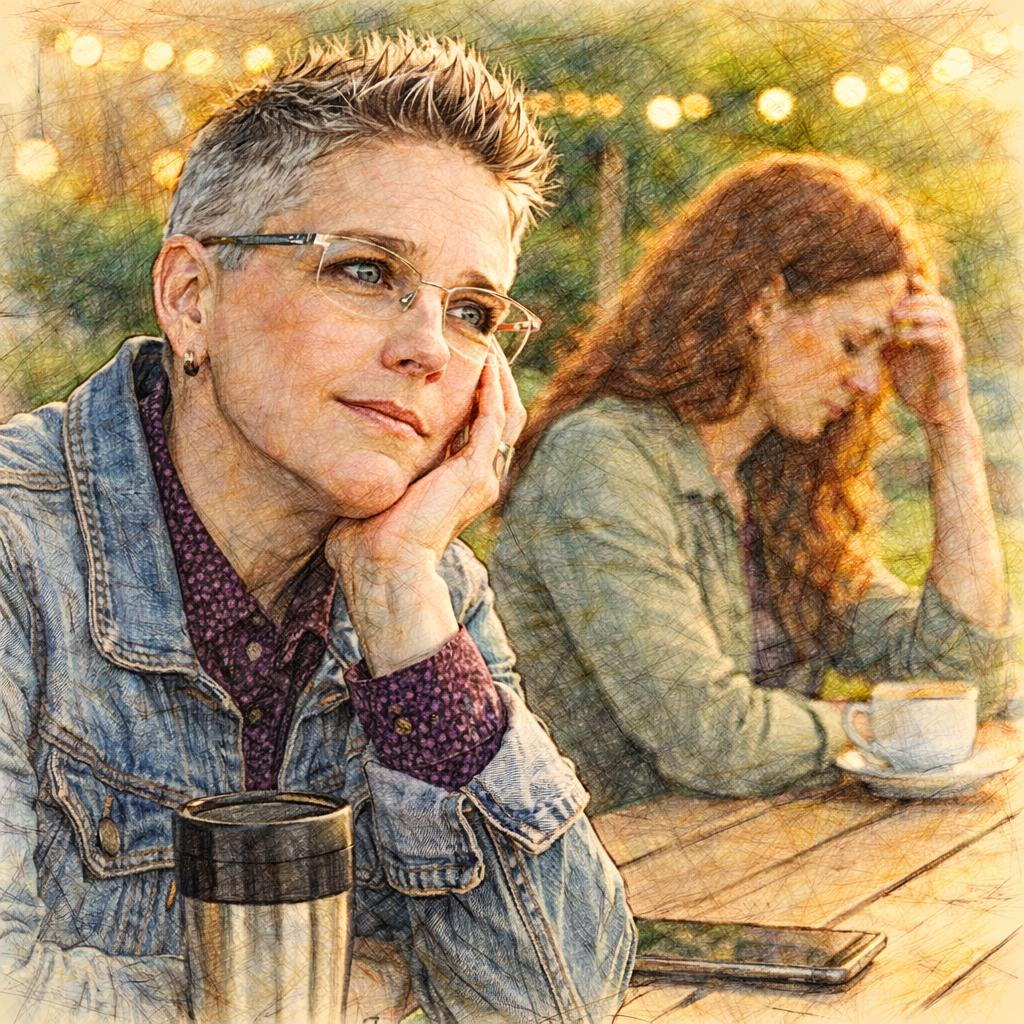
On emotional boundaries, ambiguous loss, and why integrity sometimes comes at a personal cost.
Boundaries are essential in healthy relationships. They help define where one person ends and another begins—emotionally, mentally, and behaviorally (Cloud & Townsend, 2017). Yet, when boundaries are enforced, particularly in relationships with long-standing emotional investments, the results can be painful and, at times, friendship-ending. One of the most disorienting realities is this: sometimes, saying “no” is enough to sever a bond you thought was secure.

A Personal Account: When “No” Was Too Much
Several months ago, I lost someone I considered a close friend. Our friendship had weathered many seasons—mutual support, vulnerability, laughter, and grief. We had history. But the rupture came over something relatively minor on the surface: I declined a request.
Her partner, with whom I had no direct relationship, asked to use my membership account for a wellness company they had previously boycotted for political reasons. It wasn’t the first time my friend had asked me to add a product or two to my order—something I didn’t mind. But this felt different: the request came through her partner, was detailed and directive, and implied an ongoing arrangement. I had no desire to be entangled in that kind of responsibility, especially after their shared ethical stance against the company.
So, I said no.
I responded kindly but clearly in a group chat that I had already placed my order for the month. Separately, I messaged my friend, gently posing a rhetorical question about the inconsistency of the request, given their previous boycott.
What followed was unexpected. She interpreted my response as judgmental and accused me of moral policing. Despite my efforts to clarify that there was no intent to shame, the dynamic shifted. There was a noticeable coolness. Over the course of a few weeks, the communication faded, and so did the friendship.
A holiday came around the following week. I sent her a holiday message. There was no response.
Two weeks later, I was scheduled for surgery. The night before, she reached out to say she was still struggling with how to respond to our last exchange but felt it was important to set that aside and wish me well. I appreciated the sentiment and replied with a simple thank you, hoping it might open the door to reconnection.
But nothing followed.
Two more holidays came and went in silence. The silence felt deliberate. The emotional distance, undeniable.
The Hidden Cost of Saying No
Many people assume that setting boundaries—especially reasonable ones—will automatically be respected by those who care for us. But that’s not always the case. For some, a boundary can feel like a personal rejection, a withdrawal of emotional availability, or even a form of judgment.
This is particularly common in codependent or enmeshed dynamics, where emotional roles are blurred and mutual expectations go unspoken but deeply felt (Beattie, 2009). In those contexts, boundaries are not just resisted—they're resented.
Moreover, the psychological concept of “transactional friendship”—where the foundation of the relationship is, often unknowingly, built on exchanges rather than authentic connection—can explain why a single denied favor can feel like betrayal. When one person begins to say no, it disrupts the unspoken contract, revealing assumptions the other may not even know they held (Brown, 2012).
The Right to Disappoint
As therapist and author Nedra Glover Tawwab (2021) puts it: “You are allowed to disappoint others in service of yourself.” That permission is both liberating and costly. Disappointment is not inherently destructive, but many people struggle with tolerating it—especially when tied to feelings of rejection, abandonment, or shame.
In this case, the boundary wasn’t about judgment or morality—it was about capacity and autonomy. I wasn’t willing to make a recurring exception for someone I didn’t have a direct relationship with, particularly in light of the political and ethical tension surrounding the request.
Still, the boundary was not received as a neutral choice—it was interpreted as a personal affront. And it cost me a friend.
Grieving the Unexpected Ending
Friendship losses—especially ambiguous ones—are deeply painful and often overlooked in our culture. There's no ritual or formal recognition for this type of grief, yet it carries the emotional weight of betrayal, confusion, and heartbreak.
The pain is compounded when the rupture feels avoidable or rooted in misunderstanding. I found myself replaying our conversations, wondering if I could have phrased things differently, if my tone was misread, if I had unknowingly triggered something deeper.
But ultimately, I came back to this truth: a healthy relationship can withstand a boundary. If it can’t, it may not be as reciprocal or safe as it once seemed.
What This Teaches Us About Boundaries
Boundaries are not just about protection—they’re about clarity and trust. They clarify who we are, what we value, and what we are willing (and unwilling) to engage in.
Key takeaways for clinicians and readers alike:
- Boundaries are not rejection: They’re expressions of needs and limits, not judgments of character.
- You’re not responsible for others’ reactions: People are allowed to feel disappointed, but they also bear responsibility for how they manage those feelings.
- Not all relationships survive healthy boundaries: This doesn’t mean the boundary was wrong; it might simply reveal that the relationship depended on your self-abandonment.
Closing Thoughts
Saying no can sometimes cost you a friendship. That reality hurts—but it also brings clarity. It highlights who respects your autonomy and who expects your compliance.
I still grieve that friendship. I miss the easy laughter, the long talks, the shared history. But I don’t miss the pressure to prioritize someone else’s comfort over my own boundaries.
Sometimes, peace comes at a cost. And sometimes, the price of maintaining self-integrity is worth it.
References
Beattie, M. (2009). Codependent no more: How to stop controlling others and start caring for yourself. Hazelden Publishing.
https://www.barnesandnoble.com/w/codependent-no-more-melody-beattie/1100391778?ean=9781954118218
Brown, B. (2012). Daring greatly: How the courage to be vulnerable transforms the way we live, love, parent, and lead. Gotham Books.
https://brenebrown.com/book/daring-greatly/
Cloud, H., & Townsend, J. (2017). Boundaries: When to say yes, how to say no to take control of your life (Updated and expanded ed.). Zondervan.
https://www.boundariesbooks.com/products/boundaries-updated-expanded-edition
Tawwab, N. G. (2021). Set boundaries, find peace: A guide to reclaiming yourself. TarcherPerigee.
https://www.nedratawwab.com/books/set-boundaries-find-peace